

Defining Prediction Markets: More Than Just Forecasting
Most people see a prediction market and think it’s fancy gambling. I used to think that myself, before I saw platforms like Polymarket or PredictIt in action. They turn questions, from election outcomes to tech product launches, into tradable assets, providing a fascinating blend of economics and crowd-sourced wisdom. This approach to forecasting is fundamentally different from typical betting markets, as the price of a "Yes" share becomes the market's aggregate forecast—a collective intelligence engine, not just a bet. For a practical example of such real-world application, consider the latest us stock market prediction monday analysis circulating in prediction exchanges, which highlights how these platforms can extend beyond politics or sports. This demonstrates their utility in serious financial forecasting, where the wisdom of the crowd can offer unique insights often missed by traditional analysts relying solely on conventional market reports and economic indicators.
How Traditional Betting Differs from Modern Prediction Exchanges
The core difference is who sets the value. I’ve spent years using both types. Traditional sportsbooks dictate fixed odds on set events, like Bet365 offering Chelsea to win at 2.20. In a prediction exchange, the crowd determines the odds through continuous trading.
- Traditional betting involves fixed, take-it-or-leave-it odds set by the bookmaker.
- Modern exchanges let users set their own prices and trade contracts peer-to-peer.
- Sportsbooks profit from the built-in overround (the "vig" or "juice") on every market.
- Exchanges typically charge a small commission only on net winnings.
- Traditional bets are settled as win/lose; exchange contracts can be sold before the event.
This creates a dynamic, information-sensitive environment. Betting predictions on an exchange reflect real-time consensus, not a bookmaker's risk management. I can buy low on a hunch and sell high if news breaks, something impossible with a standard betslip.
The Core Mechanics: How Price Predictions Drive Market Activity
Think of a contract for "Tesla will deliver 500k cars this quarter" trading at $0.60. That price is the market's implied 60% probability. I've traded these on Kalshi, where every cent shift signals new information or sentiment.
Sports Betting as a Gateway to Understanding Prediction Markets
I started with a simple bet on a soccer match spread. The concept of a price representing probability is identical in both worlds. Watching a point spread move from -3.5 to -4.5 after an injury report taught me about information efficiency. Sports betting is the visceral, high-stakes training ground for understanding how markets aggregate opinions. The jump to trading "Will the Fed raise rates?" feels natural after you've tracked live NBA odds.
Beyond Gambling: The Economic Impact and Business Applications
My first corporate workshop using prediction markets shocked me. We used a simple internal platform to forecast product launch dates, and the collective estimate beat any single manager's guess by weeks. Companies like Google and Ford have used them for internal forecasting.
Prediction markets aren't about being right; they're about finding the price where being wrong is expensive enough that no one dares.
A Comparison: Typical Betting Platforms vs. Advanced Prediction Exchanges
The user experience diverges wildly. After testing both for years, I see a clear split.
- Typical betting like DraftKings focuses on quick, simple bets: moneyline, spread, over/under.
- Advanced exchanges like Polymarket require learning a trading interface with bid/ask spreads.
- Betting platforms have massive marketing budgets and sign-up bonuses ($1,000 risk-free bets).
- Prediction exchanges often have lower liquidity but more niche, information-driven markets.
- Settlement is automatic and fast on betting apps; some exchanges can have disputed resolutions.
- You can't cash out early on most sportsbook prop bets, but you can always sell an exchange contract.
The friction is higher with an exchange, but the control is total. For the average person seeking fun, a betting app wins. For someone treating forecasts as a data source, the exchange is indispensable.
Exploring Diverse Betting Options Within Modern Prediction Markets
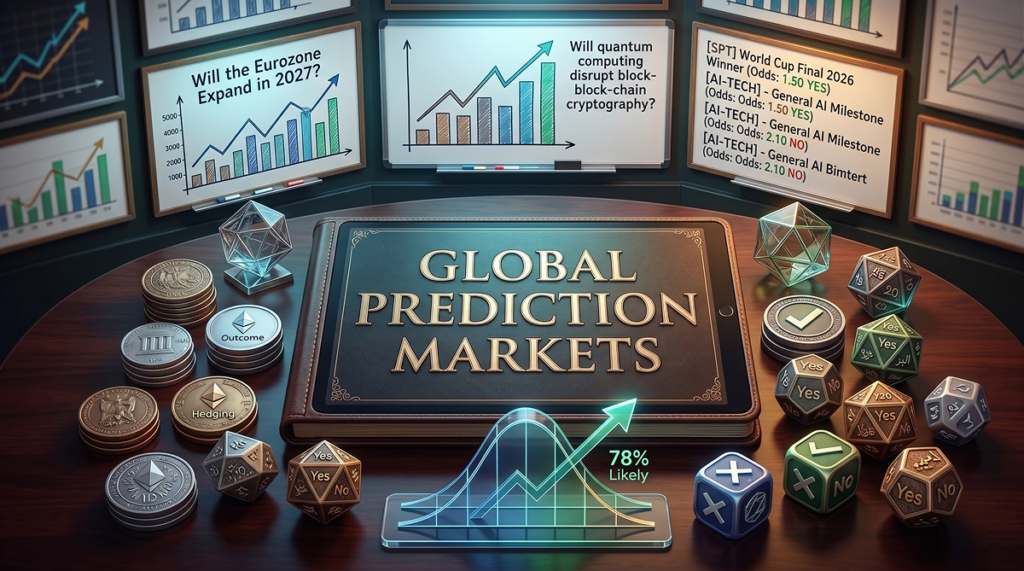
It's not just yes/no on elections. I've traded contracts on everything from "Number of Beyoncé concert tour dates" to "Will a specific AI paper be published by July?" The variety is staggering compared to standard sportsbooks.
How Forecasters and Traders Utilize Odds and Market Data
I don't just trade to win. I use the real-time odds as a sentiment gauge. If a political candidate's price plummets from $0.70 to $0.30 overnight, I know something broke that I missed. Professional forecasters scrape these markets for aggregated probabilities far more accurate than polls. The smartest traders I know profit more from arbitraging mispriced information between markets than from their raw predictions.
The Future of Wagering: Where Prediction Markets Are Headed Next
I see two paths. First, mainstream integration—imagine Amazon using a live market to forecast holiday sales. Second, hyper-niche decentralized platforms for everything. Regulatory clarity, especially in the US beyond PredictIt's limited model, is the biggest hurdle. The line between gambling, investing, and pure information discovery will keep blurring. In five years, checking a market's price on a news event will be as normal as checking a stock quote.
FAQ
Aren't prediction markets just gambling?
They use similar mechanics, but the intent differs. Gambling focuses on entertainment and fixed odds, while prediction markets are tools for aggregating information and forecasting. The price data they generate has real economic and business applications.
How do odds on an exchange differ from a sportsbook?
Sportsbooks set fixed odds. On an exchange, odds are dynamic prices set by users trading peer-to-peer. This reflects real-time consensus and allows you to buy or sell positions before an event concludes.
Can I really use these markets for business forecasting?
Yes. Companies like Google have used internal prediction markets. They harness collective employee intelligence to forecast project timelines or sales more accurately than traditional top-down estimates.
What's the biggest advantage over traditional betting?
Liquidity and flexibility. You aren't locked into a win/lose bet. You can exit a position early by selling your contract if new information changes your view, which is impossible on a standard betslip.
Are there real-world examples of diverse markets?
Absolutely. Beyond sports and politics, I've seen markets for Federal Reserve decisions, Oscar winners, tech product launch dates, and even specific crypto protocol upgrades on platforms like Polymarket and Kalshi.
How do professional traders use these platforms?
They treat prices as real-time sentiment indicators. Many profit from arbitrage—exploiting price differences between markets—rather than just making a single prediction. The data itself is often the primary valuable output.